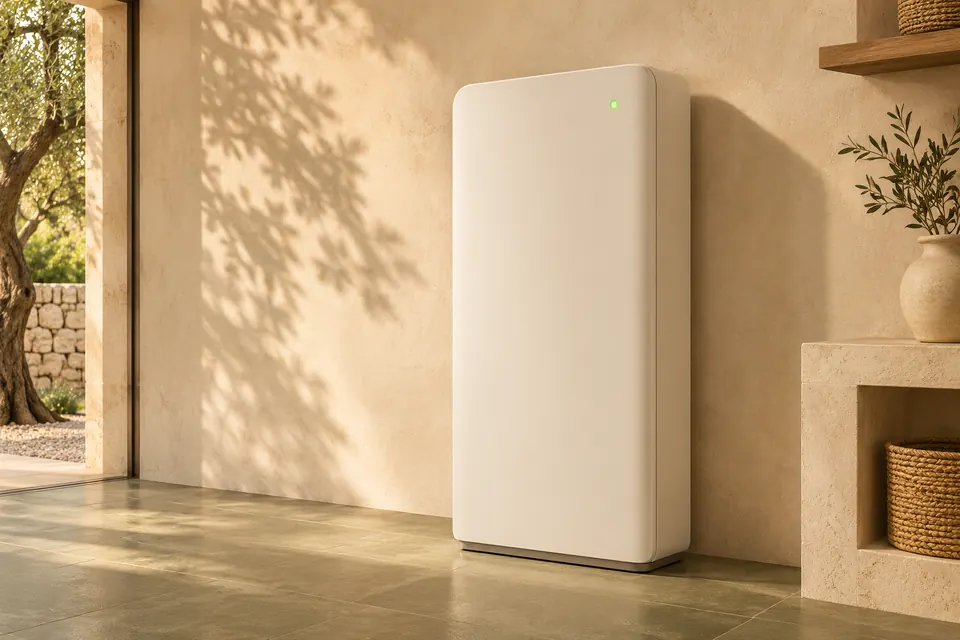
A physical battery stores energy at home
When solar generation exceeds consumption, a compatible system can store some of that energy for later. Usable capacity, power output and charging controls need to suit the installation.
Before requesting a particular capacity, review how much surplus you generate and what you use outside solar hours. Inverter and meter data help the professional size the battery.
A virtual battery accumulates credit
The term virtual battery generally describes a commercial credit service associated with exported energy. It does not mean electricity is physically stored at home. Credit rules, fees and expiry depend on the contract.
Compare the electricity supplier’s full terms. A commercial credit balance does not replace physical storage or keep your home powered during a grid outage.
Having a battery does not guarantee backup
A grid-connected installation does not automatically become an emergency power system when storage is added. Backup requires suitable equipment, safety devices and configuration.
If this matters to you, explain which appliances you want to keep running and ask the quotation to define the scope. Runtime depends on the available charge and the connected equipment.
Check compatibility with existing solar panels
Give the installer the inverter make and model, available documentation and consumption information. Compatibility and required adaptations must be confirmed using manufacturer guidance.
Request a quotation separating the battery, adaptations, commissioning and warranties so you can assess the cost of adding storage.
Sources and further reading
ICAEN · Preguntes freqüents sobre autoconsum ↗IDAE · Qué es el autoconsumo ↗